Can a Trucking Company Use “Adverse Weather” as an Excuse for a Denver Crash?
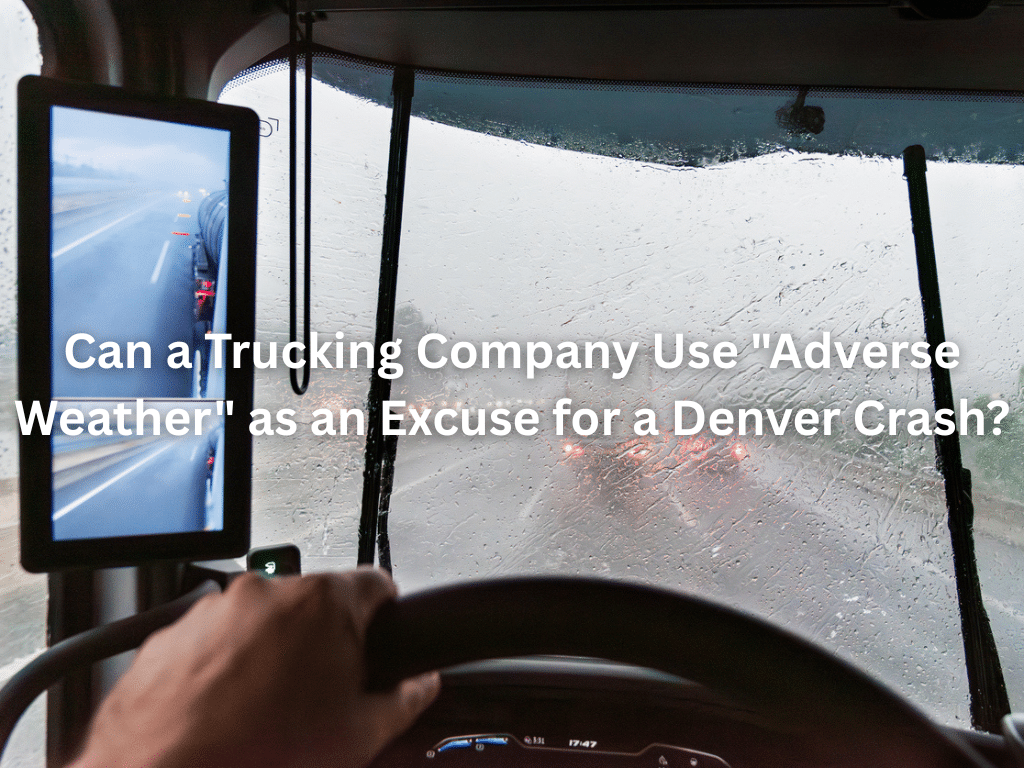
Anyone who lives or drives around the Front Range knows that Colorado weather is fiercely unpredictable. You can start your morning under clear blue skies in Denver and find yourself driving through a blinding whiteout or a freezing rainstorm on I-70 by afternoon. When a massive, 80,000-pound commercial vehicle loses control on an icy overpass or hydroplanes through a heavy downpour and slams into your car, the consequences are devastating. In the aftermath, the trucking company’s insurance adjusters almost always deploy the exact same defensive shield: “It wasn’t our driver’s fault; it was an unavoidable accident caused entirely by Mother Nature.”
I am here to tell you that under the law, “adverse weather” is almost never a legitimate excuse for a truck crash. In fact, when conditions worsen, a professional truck driver’s legal responsibility to protect the public actually goes up, not down. At Treviño Law, I approach these complex winter and storm-related collisions with an insider’s understanding of defense tactics, leveraging federal safety mandates to prove that what the insurance company calls an “Act of God” was actually a human failure to adapt to foreseeable Colorado road conditions.
The Higher Standard: Professional Duty of Care on Colorado Roads
In a standard car accident case, everyday motorists are held to a standard of “reasonable care.” But commercial truck drivers are highly trained professionals operating lethal pieces of heavy equipment. Because of this, they are bound by strict federal regulations that dictate exactly how they must behave when weather conditions turn hazardous.
Under the Federal Motor Carrier Safety Regulations, specifically 49 CFR § 392.14, commercial motor vehicle operators are required to exercise “extreme caution” when hazardous conditions like snow, ice, sleet, fog, mist, or rain adversely affect visibility or traction. The regulation goes a step further: if conditions become sufficiently dangerous, the driver is legally mandated to cease operations entirely and pull over safely until the storm passes.
Furthermore, Colorado state traffic laws align directly with this heightened responsibility. Under C.R.S. § 42-4-1101, no person is permitted to drive at a speed greater than is “reasonable and prudent under the conditions then existing.” This means that even if a trucker is driving below the posted 65 MPH speed limit on a snowy afternoon, they can still be held fully liable for speeding if a prudent professional should have been driving at 30 MPH—or parked at a truck stop.
How I Break Down the “Act of God” and “Sudden Emergency” Defenses
When an insurance provider denies a Denver truck accident claim based on weather, they are usually relying on the “Sudden Emergency” doctrine or an “Act of God” defense. They want a jury to believe that the ice patch or fog bank was a completely unpreventable, sudden shock that no one could have anticipated.
To shatter this defense, I don’t look at the weather as an isolated event; I look at the data leading up to it. In Colorado, winter storms and heavy mountain fronts are highly forecastable events. To prove negligence, my firm routinely requests and cross-references several streams of electronic evidence:
- CDOT Weather and Warning Logs: I pull the archives from the Colorado Department of Transportation (CDOT) to identify exactly when variable message signs, traction laws, or chain alerts were activated along the truck’s route. If the state was flashing warnings to slow down hours before the crash, the “sudden emergency” defense completely falls apart.
- Black Box Data (EDR/ECM): The truck’s internal electronic data recorder tracks exact speed, throttle position, and steering inputs. If the data shows the trucker failed to reduce their speed by at least half on snow-packed roads, their liability is clear.
- Fleet Dispatch and Routing Records: I dig into corporate communication logs to see if the motor carrier was actively pressuring the driver to push through a known blizzard to hit a strict delivery window in Denver, effectively forcing their driver to ignore safety codes.
Corporate Responsibility: Neglecting Equipment in Hazardous Conditions
Sometimes, a weather-related crash happens because a trucking company deliberately gambled with public safety before the truck ever left the terminal. Operating a heavy commercial truck in rain or snow requires specialized, well-maintained equipment. If a carrier sends a driver out onto a slick highway with bald tires or worn brake systems, they are setting the stage for a catastrophic hydroplaning or jackknife collision.
According to safety enforcement findings from the Commercial Vehicle Safety Alliance (CVSA), defective brake systems and insufficient tire tread depths are among the primary reasons commercial rigs are placed completely out of service during emergency roadside inspections. If a trucking fleet skips mandatory maintenance to keep their trucks moving, they cannot point their finger at Colorado’s weather when those neglected systems fail in a storm.
Jaime’s Perspective
When I was representing major transportation lines and corporate insurers, weather cases were always our favorite files to defend. Our goal was simple: turn Mother Nature into the ultimate scapegoat. We would show juries dramatic photos of snowbanks or heavy fog, hire expensive meteorologists to testify about shifting wind gusts, and argue that our driver did everything humanly possible to control the truck. We wanted the victims to feel like they were just victims of bad luck, rather than corporate greed.
I know that playbook because I lived it. But now that I stand on the side of injured families, I use that very insider knowledge to dismantle those exact excuses. I know that professional truck drivers are heavily trained to expect the unexpected, especially here in Colorado. If a storm is severe enough to cause a multi-ton rig to lose control, a properly trained driver knows they are legally required to park the vehicle. When an insurance adjuster tells my clients that an accident was “unavoidable” due to ice or rain, I don’t argue with them about the weather. I show up with the truck’s telemetry logs, the federal regulatory handbooks, and the CDOT warnings to prove that their driver chose to gamble with your life just to protect their bottom line. I know how they try to hide behind a snowstorm, and I know exactly how to pull them out into the light.
Secure Your Future with Treviño Law: High-Stakes Truck Accident Advocacy in Denver
In the wake of a commercial vehicle collision during bad weather, the window for preserving vital digital evidence is incredibly small. While you are trying to recover from severe injuries, the trucking corporation’s rapid-response legal department is already on the ground collecting evidence to shield themselves from financial liability. You deserve a dedicated Denver truck accident lawyer who recognizes their defensive strategies before they are ever deployed in a Colorado courtroom.
Treviño Law delivers the strategic, high-stakes advocacy required to challenge corporate trucking fleets and secure the maximum compensation you are rightfully owed. If you or someone you love has been harmed in a commercial vehicle wreck anywhere in the Denver metro area, do not let the insurance company write off your injuries as a weather anomaly. Reach out to our experienced Denver legal team today.
Ready to challenge the corporate giants? Schedule a Free Case Evaluation with me at our Denver office today.
Authored By
Jaime Treviño

Founder & Partner, Treviño Law
The Expert Edge: Jaime Treviño is a formidable trial attorney with 20+ years of experience. After a decade representing major insurance corporations, he now uses that “insider” knowledge to protect injury victims—anticipating and neutralizing defense tactics before they can impact a claim.
Proven Results: Jaime has a history of securing landmark results, including $6.3 million settlement of an 18-wheeler accident and an $8.5 million settlement in delivery vehicle crash.
Elite Achievement: Jaime is a Lifetime Member of the Multi-Million Dollar Advocates Forum, a prestigious group limited to the top 1% of U.S. trial lawyers who have acted as lead counsel in cases resulting in multi-million dollar settlements or verdicts.
Education & Memberships: University of Texas School of Law (J.D.)